What an implant replaces
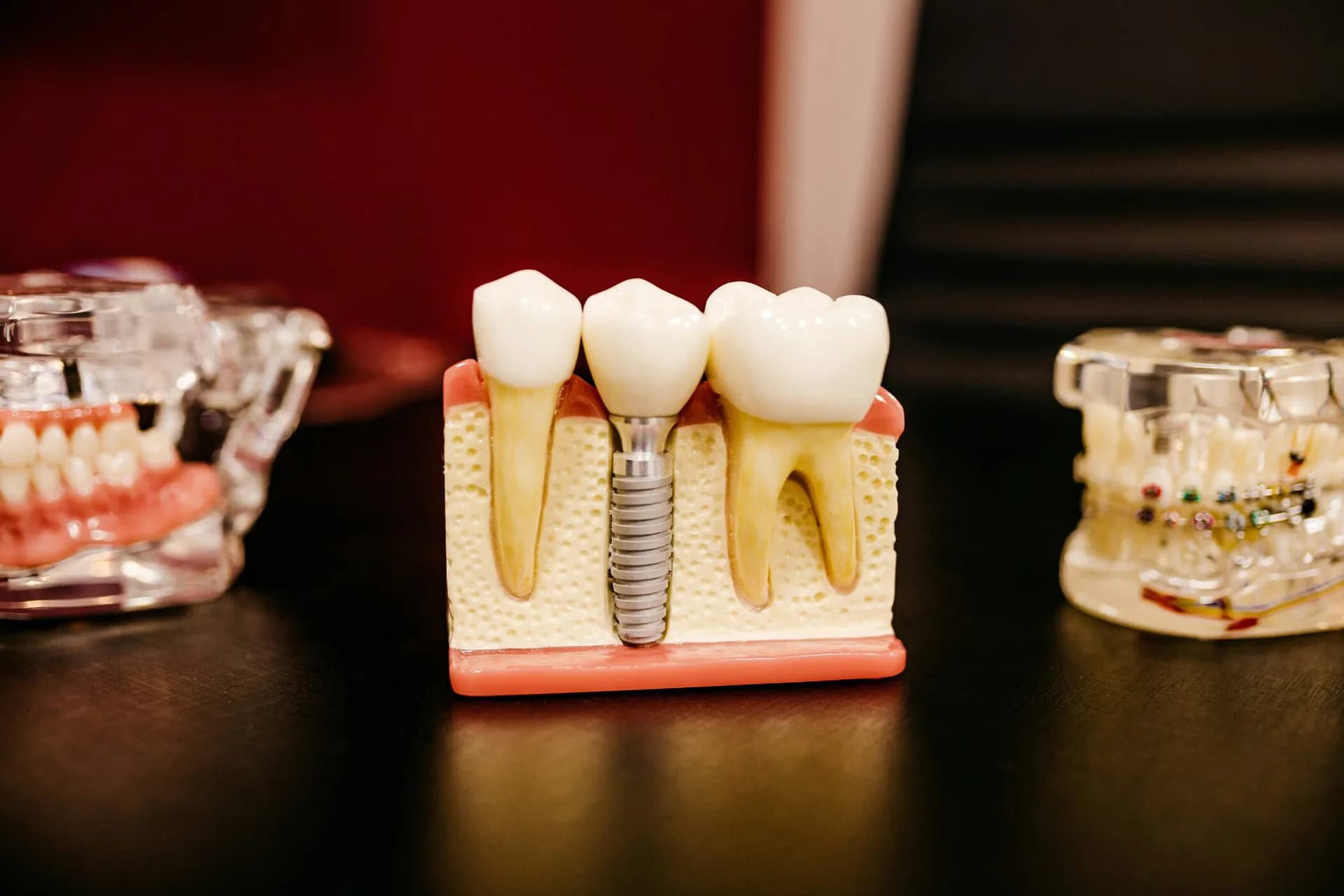
A dental implant is a titanium post placed in the jawbone to take the role of a missing tooth root. Bone grows against the surface over several months and holds it in place. On top sits an abutment and then a crown, which is the part you see. Three components, placed across separate visits, which is why the process takes longer than most patients expect.
The reason to replace a root rather than just the visible tooth is that the jawbone shrinks where a tooth has been lost. A bridge restores appearance and chewing without addressing that. An implant loads the bone and slows the loss. It is also the only option that leaves the neighbouring teeth untouched, where a conventional bridge requires cutting down the teeth on either side.
The timeline, honestly
Marketing in this region sometimes advertises implants in a day. That is achievable in selected cases and misleading as a general promise. Here is the ordinary sequence.
Assessment, week 1
Examination, a 3D cone beam scan, and a review of your medical history. The scan shows bone height, bone width and the position of nerves and sinuses. This is where the clinician establishes whether there is enough bone to place an implant at all, and whether grafting is needed first. Uncontrolled diabetes, smoking, certain bone medications and active gum disease all change the plan at this stage.
Preparatory treatment, where needed, 3 to 6 months
If bone volume is insufficient, a graft or a sinus lift is done first and left to heal. Many patients skip this stage entirely. Those who need it should be told at assessment, not discovered mid-treatment.
Placement, day 1 of the implant itself
Placing the post is usually a one to two hour appointment under local anaesthetic. The clinician opens the gum, prepares the site, places the implant and closes. Some cases allow a temporary tooth the same day. Many do not, and forcing it risks the outcome.
Osseointegration, 3 to 6 months
The bone bonds to the implant surface. Nothing is happening visibly and nothing should be rushed here. Lower jaw sites tend toward the shorter end, upper jaw and grafted sites the longer. You wear a temporary restoration through this period if the gap is visible.
Abutment and crown, 2 to 4 weeks
Once integration is confirmed, the clinician attaches the abutment and takes a scan for the crown. The laboratory makes it, and a final visit fits and adjusts it against your bite.
Total, for a straightforward single implant: four to nine months. With grafting, up to a year. A clinic quoting a materially shorter timeline should be asked to explain what stage they are compressing and why.
Healing, week by week
The first 48 hours bring swelling and some bleeding, both normal. Use the cold compress and take the prescribed pain relief before the anaesthetic wears off rather than after. Eat cold, soft food. Do not rinse vigorously, do not use a straw, and do not smoke, because the suction and the heat both disturb the clot.
Days three to seven, swelling peaks around day two or three and then settles. Most patients are comfortable on ordinary pain relief by the end of the week. Keep the area clean with the rinse you are given and brush the other teeth normally.
Weeks two to four, sutures are removed or dissolve, and the gum closes. You return to a normal diet on the other side of the mouth. The implant site itself should feel like nothing.
Months two to six, the quiet phase. Attend the review appointments even when nothing appears to be happening, because that is exactly when a problem is still cheap to fix.
Call the clinic rather than waiting if you have pain that increases after day three, swelling that worsens after day four, a fever, a bad taste that persists, or any feeling of movement in the implant.
What makes implants fail
Success rates for well-planned implants sit above ninety-five percent over ten years in the published literature. The failures cluster around a short list of causes, and most of them are known before treatment starts.
Smoking is the largest modifiable risk, because it reduces blood supply to healing bone. Uncontrolled diabetes slows healing in the same way. Untreated gum disease around the remaining teeth seeds bacteria around the implant, which causes peri-implantitis, the implant equivalent of gum disease and the most common late failure. Grinding overloads the implant before the bone has adapted. Poor cleaning around the crown does the same work more slowly.
The point of listing these is that they are addressable. A clinic that raises them at assessment is protecting the outcome. One that does not is not planning your case properly.
Cost in Dubai
Quotes vary widely across the city, and the variation is rarely about profit margin alone.
When comparing quotes, establish whether the figure includes all three components or only the post, which implant system is used and whether parts remain available in ten years, whether the 3D scan and follow-ups are included, and what the practice does if the implant fails within the warranty period. A quote that covers only the post looks cheaper and is not.
Living with an implant
Brush twice daily and clean between the implant and its neighbours every day with floss or an interdental brush. Book hygiene visits at the interval your clinician sets, usually every six months, because peri-implantitis is silent until it is advanced. Wear a nightguard if you grind. The crown itself will not decay, but the gum and bone holding the implant behave like the tissue around any other tooth and need the same care.
Common questions
Is the procedure painful?
Placement is done under local anaesthetic and is not painful at the time. Most patients report the discomfort afterwards as less than an extraction.
How long does an implant last?
The post can last decades and often outlives the crown, which may need replacing after ten to fifteen years of wear. Longevity depends more on gum health and cleaning than on the implant itself.
Can I have an implant if I have been missing the tooth for years?
Often yes, though bone loss over time makes grafting more likely. The scan gives the answer.
Can I have all my teeth replaced with implants?
Full-arch restoration usually uses four to six implants supporting a fixed bridge rather than one implant per tooth. It is a different treatment with a different plan and cost.
Next step
Implant planning at MID starts with a 3D scan and a written plan covering timeline, stages and total cost before anything is placed. Book an implant consultation or read about restorative dentistry at MID.
This article is general information, not a diagnosis or treatment plan. Whether an implant suits you can only be established by clinical examination and a 3D scan. Reviewed by Dr. Yasser Seif, Implantology Specialist, MID Clinic, Dubai.